
Table of Contents
- What to Look for in a Botox Provider
- Key Botox Consultation Questions to Ask
- Understanding Botox Cost in Your Area
- How Long Do Botox Results Last
- Botox Safety and Side Effects
- Treatment Areas and What to Expect
- Frequently Asked Questions
Last Updated: October 14, 2026
What to Look for in a Botox Provider
Finding the right best botox providers means looking beyond reputation and testimonials to compare them fairly. A more useful approach is to score every provider against the same checklist. Below is the framework we use, and the questions that expose whether a provider actually meets each standard.
1. Licensure and Who Is Legally Allowed to Inject
In the United States, botulinum toxin type A is a prescription drug, so it must be administered under the supervision of a licensed prescriber. The person holding the syringe is typically a physician (MD or DO), a nurse practitioner (NP), a physician assistant (PA), or a registered nurse (RN) working under a supervising physician. Scope-of-practice rules vary by state, so the same credential can mean different levels of independence depending on where you are.
What to verify:
- The injector’s active license number, which you can look up through your state’s medical or nursing board.
- Whether a physician is on site or available for oversight, and how that supervision is documented.
- Whether the practice has a written protocol for handling complications such as vascular occlusion or an allergic reaction.
2. Training Specific to Facial Anatomy and Injectables
A general medical license does not guarantee injectable training. Ask directly:
- How many hours of hands-on injectable training have you completed?
- Which accrediting body issued the certificate (for example, the American Academy of Facial Esthetics, the American Med Spa Association, or a specialty board within the American Board of Medical Specialties)?
- Do you train other injectors, and if so, through which program?
A provider who teaches injectables usually has a deeper command of facial anatomy than one who has only taken an introductory weekend course.
3. Volume and Recency of Experience
Experience is not just years, it is repetitions. A useful benchmark: an injector who treats several Botox patients per week will have seen far more variation in muscle patterns than one who treats a handful per month. Ask:
- Roughly how many botulinum toxin treatments do you perform in a typical month?
- How often do you attend continuing education or cadaver-based anatomy courses?
- Have you handled a complication before, and what did you do?
4. A Defined Treatment Philosophy
The difference between a natural result and a frozen one usually comes down to dosing philosophy, not product. Providers who favor conservative dosing typically start lower and schedule a two-week follow-up to add units if needed. Providers who favor a single high-dose session may produce a flatter result that lasts longer but reads as treated.
Ask: “If I want to still raise my eyebrows and look expressive, how would you dose me?” Listen for a specific answer that references your muscle strength, your age, and your prior treatments, not a generic unit count.
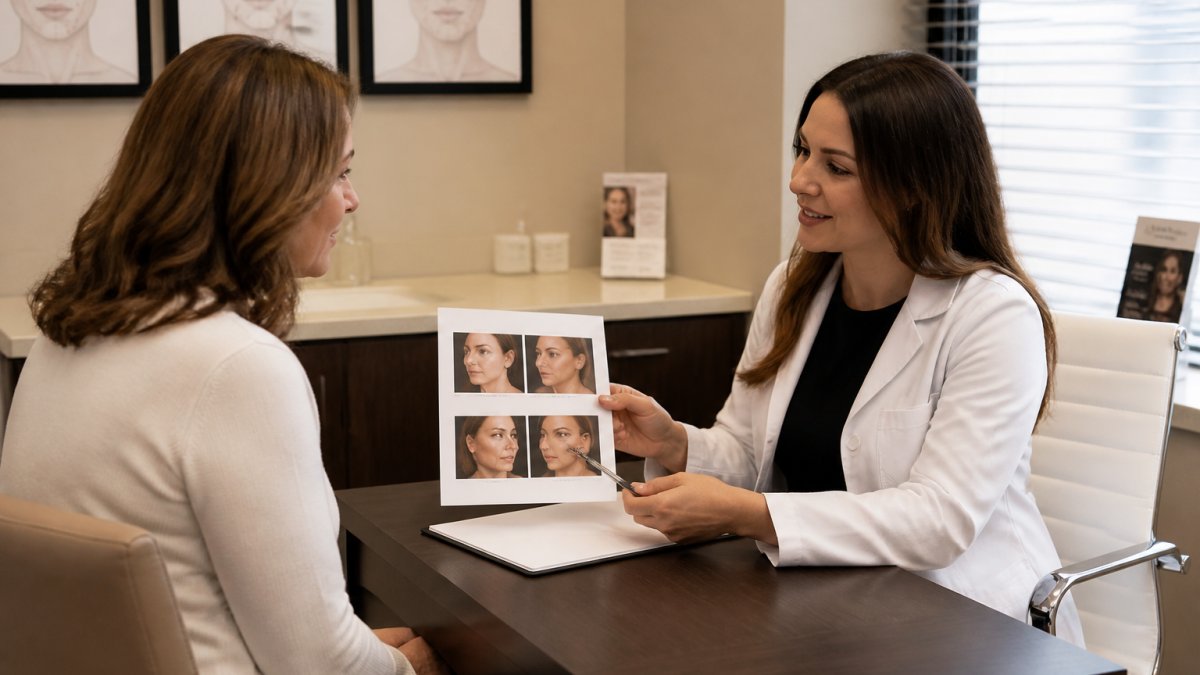
5. Before-and-After Evidence You Can Actually Evaluate
Request a range of photos, not just the best outcomes. Look for:
- Patients in your age bracket and with similar muscle patterns.
- Photos taken at rest and in animation (smiling, frowning, raising brows).
- Consistent lighting and angles so you can judge the change honestly.
6. Aftercare, Touch-Up, and Correction Policy
This is the criterion most roundups skip. Before you book, confirm:
- When is the follow-up visit, and is it included in the price?
- If results are asymmetric or underwhelming at the two-week mark, what is the touch-up policy?
- If a complication such as eyelid drooping occurs, who manages it and at what cost?
A provider who answers these questions in writing is signaling that they stand behind their work.
Bring this checklist to every consultation. Score each provider on the six criteria above, and compare the scores side by side rather than relying on star ratings alone.
At The Health & Wellness Center, Dr. Secil Schodroski, our family nurse practitioner, works under a documented supervision protocol and follows a conservative, follow-up-based dosing approach. We are happy to walk through each of the criteria above during your consultation.
Key Botox Consultation Questions to Ask
Your consultation is your chance to evaluate whether a provider is right for you. Come prepared with specific questions about botox consultation questions that matter to your decision.
Start with credentials: “What’s your training and certification in botulinum toxin administration?” Then move to philosophy: “Can you walk me through how you’d approach my specific concerns?” Ask about their experience with your age group and skin type.
Ask about the injection process itself. How many units do they typically use for your areas of concern? What’s their approach to achieving natural results? How do they handle asymmetry or existing lines?
Finally, ask about follow-up and corrections. What happens if you’re unhappy with results? Can you schedule a touch-up? Do they offer any guarantees or adjustments?
Understanding Botox Cost in Your Area
Most provider pages hide pricing behind a consultation, which makes comparison nearly impossible. Here is the transparent framework you can use to estimate your own cost and compare quotes from different clinics on equal terms.
How Botox Is Priced
Botox and other botulinum toxin type A products are priced per unit. A unit is a standardized measure of the drug’s activity, and it is the same unit across brands such as Botox Cosmetic, Dysport, and Jeuveau, though the brands are not interchangeable unit-for-unit. Most practices quote either a per-unit price or a flat price per treatment area. (Source: American Society for Aesthetic Plastic Surgery’s statistics)
Typical per-unit pricing in the United States generally falls somewhere between roughly $10 and $20 per unit, depending on the practice, the injector’s experience, and any promotions. Flat area pricing often lands between roughly $200 and $600 per area. These are ranges, not quotes, and your actual cost depends on the number of units your provider determines you need.
Typical Unit Ranges by Treatment Area
Unit counts vary by muscle strength, but the following ranges are common starting points:
- Glabellar lines (the “11s” between the brows): roughly 20 to 30 units
- Forehead lines: roughly 10 to 20 units
- Crow’s feet: roughly 12 to 24 units, split across both sides
- Bunny lines: roughly 4 to 8 units
- Masseter (jaw slimming): roughly 20 to 50 units per side
A first-time patient treating the upper face (glabella, forehead, and crow’s feet together) often lands in the 40 to 70 unit range. That means a realistic total at $12 per unit is roughly $480 to $840, while the same treatment at $16 per unit is roughly $640 to $1,120.
What Else Shows Up on the Bill
- Consultation fee: some practices charge $50 to $150 and credit it toward treatment; others offer free consultations.
- Follow-up visit: often included, but confirm in writing.
- Touch-up units at the two-week mark: sometimes free, sometimes charged at the standard per-unit rate.
- Membership or loyalty programs: many practices offer a per-unit discount, typically 10 to 20 percent, for recurring patients.
How to Compare Quotes Fairly
When you call around, ask each practice the same four questions:
- What is your per-unit price for the product you would use on me?
- What unit range do you typically use for my treatment areas?
- Is the two-week follow-up included, and are touch-up units free or charged?
- Do you offer any new-patient or membership pricing?
Multiply the per-unit price by the high end of the unit range to get your worst-case total, and by the low end to get your best case. That gives you an apples-to-apples number to compare across clinics.
A very low per-unit price is not automatically a better deal. If the injector uses fewer units than your muscles need, you may see partial results and end up paying for a second treatment. Ask what the practice’s typical total cost is for your specific areas, not just the per-unit rate.
Why the Cheapest Option Often Costs More
Under-dosing, over-dosing, or poor placement can all require corrective treatment elsewhere, which means paying twice. When you compare providers, weigh the per-unit price against the injector’s training, volume, and follow-up policy. A slightly higher per-unit rate from a provider who includes a two-week follow-up and free touch-ups is frequently the lower total cost of care.
At The Health & Wellness Center, we quote pricing during your consultation based on the unit range we recommend for your specific areas, and we confirm the follow-up and touch-up policy before you commit. Contact us for a current quote.
How Long Do Botox Results Last
Botox results typically appear within 3-7 days, with full results visible around two weeks. The timeline varies slightly based on your metabolism and how your body responds to the treatment. Results continue to improve subtly over the first month.
Most people see results lasting 3-4 months (the American Academy of Dermatology). After that, the botulinum toxin gradually wears off and your muscles regain movement. This is actually a safety feature, it’s reversible.
Many people schedule maintenance treatments every 3-4 months to keep results consistent. Some find they need less frequent treatments over time because their muscles become trained to move less. Your provider should discuss a realistic timeline during your consultation and help you plan for follow-up appointments.
Botox Safety and Side Effects
Botulinum toxin has been used in medical and cosmetic settings for decades. When administered by a qualified provider, it’s a safe treatment with a strong safety profile.
Common, temporary side effects include mild bruising, swelling, or redness at injection sites. These typically resolve within a few days. Some people experience a mild headache for a day or two after treatment. These are minor and expected.
Rare side effects can include drooping of the eyelid or eyebrow if product migrates to unintended muscles. This is temporary and usually resolves within a few weeks.
Before treatment, discuss any medications you’re taking, especially blood thinners, and any previous reactions to injectable treatments. Your provider should ask detailed health questions during your consultation. If you’re pregnant or nursing, most providers recommend waiting.
Treatment Areas and What to Expect
The most common treatment areas are the forehead, the space between the eyebrows (often called the “11s” or frown lines), and the crow’s feet at the corners of your eyes.
Some people also treat the bunny lines on the nose, the corners of the mouth, or the jawline.
After treatment, you’ll receive aftercare instructions. Avoid touching the treated areas for several hours.
Finding the right best botox providers comes down to prioritizing expertise, anatomical knowledge, and a philosophy aligned with your goals.
At The Health & Wellness Center, we combine proven injection techniques with a focus on enhancing your natural beauty rather than transforming your appearance. Ready to explore whether BOTOX® is right for you?
Frequently Asked Questions
What credentials should I look for in a Botox provider?
Look for board certification in dermatology, plastic surgery, or a related medical specialty. Your provider should be a licensed physician, nurse practitioner, or physician assistant working under medical supervision. Ask about their training in facial anatomy and their experience with BOTOX specifically. A qualified provider will have completed formal training in injectables. Don’t hesitate to verify credentials directly with your state’s medical board.
What should I ask during a Botox consultation?
Ask about the provider’s experience with your specific concerns, whether they use a personalized treatment plan, what results you can realistically expect, and how they ensure natural-looking outcomes. Inquire about the number of units they typically use, their approach to facial anatomy, and what happens if you’re unhappy with results. Also ask about their recovery expectations, any restrictions after treatment, and their policy on touch-ups. A thorough consultation should address your individual goals, not follow a one-size-fits-all approach.
How long do Botox results typically last?
Most patients see results within 3 to 7 days, with full effects appearing around 2 weeks. Results typically last 3 to 4 months, though this varies based on metabolism, muscle mass, and how your body processes the product. Some people notice results fading slightly sooner, while others enjoy longer duration. Many patients schedule follow-up appointments every 3 to 4 months to maintain their results. Your provider can discuss what timeline to expect based on your individual response during your consultation.
What are common side effects of Botox treatment?
The most common side effects are mild and temporary: slight redness, swelling, or bruising at injection sites. Some patients experience a mild headache or feel slight tenderness in treated areas for a day or two. More rarely, some experience temporary heaviness in the brow or slight drooping if the product migrates, though this is uncommon with an experienced provider. Serious complications are rare. Your provider should review all possible side effects and recovery expectations before treatment. Report any unusual symptoms to your provider right away.