
Last Updated: November 1, 2026
Quick Summary
Preparation for your first IV therapy visit starts 24 hours ahead with steady hydration, aiming for clear or pale yellow urine. Eat a light meal or snack within two hours of your appointment, and bring a photo ID, a medication list, and loose or short sleeves.
- Drink a glass of water one to two hours before you arrive.
- Avoid heavy alcohol and very salty meals the night before.
- Bring a written medication list with doses, including supplements.
- Ask when you book whether you will be able to drive afterward.
- Call the clinic before you arrive if you have a fever or infection.
Table of Contents
- IV Therapy Pre-Treatment Instructions: Start 24 Hours Ahead
- What to Bring to an IV Therapy Appointment
- What to Expect During Your First IV Therapy Session
- Questions to Ask Before IV Therapy
- Personalizing Your Prep by Treatment Type and Medical History
- When to Call, Reschedule, or Seek Urgent Help
- Booking Your First IV Therapy Visit
- Frequently Asked Questions
IV Therapy Pre-Treatment Instructions: Start 24 Hours Ahead
Preparation for your first IV therapy visit starts the day before, and hydration is the single most important step. This guide walks you through exactly what to do, hour by hour, so your first infusion goes smoothly. (Source: the U.S. Department of Health and Human Services)
IV therapy is the delivery of fluids, vitamins, and minerals directly into a vein through a small catheter. A pre-treatment routine is the set of simple steps you take before your appointment to make that process safer and easier.
Why does it matter? A common mistake is showing up dehydrated and hungry. That combination makes veins harder to find and can leave you lightheaded in the treatment chair.
Hydrate Before Treatment
Drink water steadily in the 24 hours before your appointment. Aim for clear or pale yellow urine as your guide, and keep sipping on the morning of your visit.
Good baseline hydration can make your veins easier to access, which may help the care team find a suitable spot for the IV needle.
A few habits that help:
- Carry a water bottle and sip throughout the day
- Avoid heavy alcohol the night before
- Skip very salty meals that leave you feeling puffy and dry
Watch out: chugging a huge amount of water right before you walk in does not help. Spread it out. Steady hydration beats a last-minute flood.
Eat a Light Meal and Snack
Eat a light meal or snack within a couple of hours of your appointment.
Keep it simple and familiar. A snack with some protein and a little carbohydrate works well.
- Eat something within two hours of your visit
- Choose foods you already know sit well with you
- Bring a snack for afterward if you have a long drive
- Avoid a heavy, greasy meal right before treatment
If your care team gives you specific pre-treatment instructions for your treatment type, follow those over general advice.
Here is the hour-by-hour prep routine the article recommends before your first infusion.
| Step | What to do | Timing |
|---|---|---|
| Hydrate | Drink water steadily; aim for clear or pale yellow urine | 24 hours before |
| Avoid | Skip heavy alcohol and very salty meals | Night before |
| Final glass | Drink a glass of water | 1 to 2 hours before arrival |
| Eat | Light meal or snack with protein and carbohydrate | Within 2 hours of visit |
| Avoid | Heavy, greasy meal right before treatment | Before treatment |
| Bring | Snack for afterward if you have a long drive | Visit day |
What to Bring to an IV Therapy Appointment
Bring a photo ID, a list of your medications, and something to pass the time. Wear or pack short or loose sleeves so your arm is easy to access. But the practical list matters more than people expect, and the logistics around the visit matter just as much as what is in your bag.
The Visit-Day Checklist
Use this as a quick pre-visit check:
- Photo ID and insurance card, if applicable
- A written medication list with doses, including supplements and over-the-counter drugs
- Allergy information, especially past reactions to medications or adhesives
- A water bottle to sip before and after
A common mistake is wearing a tight long-sleeve shirt. It makes IV insertion awkward and leaves you stuck in a sleeve. Roll-up sleeves or a short-sleeve top solve this in seconds.
Practical Logistics to Plan Before You Arrive
Transportation. For most wellness drips, you can drive yourself home. But some medication infusions, chemotherapy, and sedating pre-medications require a driver.
Interpreter requests. If you need an interpreter, request one when you schedule.
Caregiver attendance. Ask whether a family member or caregiver can accompany you.
Parking and timing. Infusion visits can run longer than the treatment itself once check-in, health review, and monitoring are included.
If you are ill with a fever, vomiting, or an active infection, call the clinic before you arrive. Rescheduling is easy; pushing through an active infection is not worth it.
What to Leave at Home
Leave valuables at home where you can. You will be seated with an IV line in your arm, and juggling a purse, laptop, and phone one-handed is harder than it sounds. Bring only what you need to be comfortable and occupied.
What to Expect During Your First IV Therapy Session
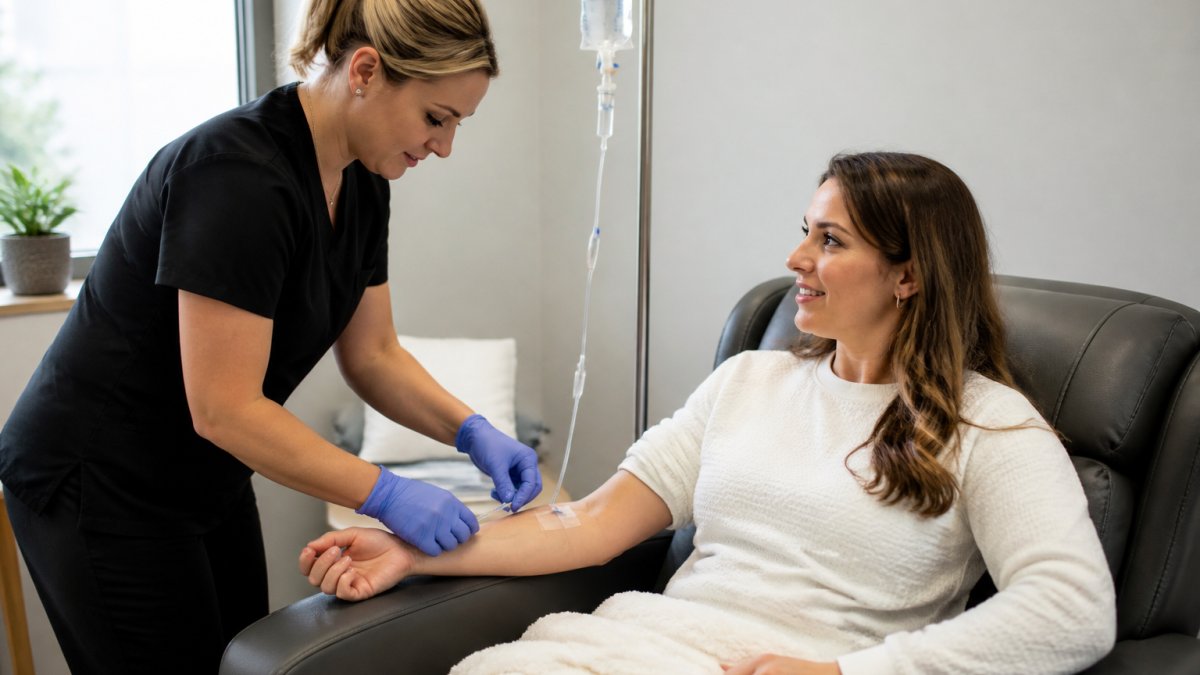
A first IV therapy session typically includes a health review, IV insertion, and an infusion. Infusion length varies by treatment, so ask your care team how long to plan for.
Here is the general flow:
- Check-in and health review. The care team confirms your medical history, medications, and allergies.
- Comfort setup. You settle into a treatment chair and roll up your sleeve.
- IV insertion. A clinician cleans the site, places a small IV needle, and secures the line.
- The infusion. Fluids and nutrients flow in over the treatment duration while you relax.
- Monitoring and wrap-up. Staff check on you, then remove the IV and give post-treatment instructions.
You should feel a brief pinch at insertion. After that, most people feel little beyond coolness in the arm.
(Source: [the National Institutes of Health (NIH)](https://www.nih.gov/health-information/nutrition-and-healthy-eating/water-nutrition))
IV Insertion and Treatment Duration
IV insertion takes only a few minutes. The clinician disinfects the skin, finds a suitable vein in your arm, and places the IV needle. Then the line is taped down so it stays put.
Treatment duration depends on the type of infusion. Larger or higher-volume infusions can take longer than smaller ones. Ask your care team how long to plan for so you can arrange your day.
If you are comparing a medically supervised clinic with a walk-in drip bar, the difference is worth understanding before your first session. You can read more on the difference between medically supervised IV therapy and drip bars.
Questions to Ask Before IV Therapy
Ask about ingredients, dosing, side effects, and what to do if you feel unwell during or after treatment. A good care team welcomes these questions.
Bring a short list so you do not forget in the chair:
- What is in this infusion, and why is each ingredient included?
- How long will the infusion take?
- What side effects should I watch for?
- Are there any interactions with my medications or supplements?
A common mistake is staying quiet about a medication or allergy because it seems minor. Tell your care team everything.
Cost is another fair question. If you want an honest look at value before you book, we break it down in is IV therapy worth the cost.
Personalizing Your Prep by Treatment Type and Medical History
Your preparation should match your treatment type and your health history. A general checklist is a starting point, not a finished plan. The single biggest mistake first-time patients make is assuming all IV therapy is the same. It is not. A hydration drip at a wellness clinic and a chemotherapy infusion at a hospital infusion center follow very different preparation rules, and mixing them up can delay your treatment or create a safety problem.
How Preparation Differs by Treatment Type
Hydration and wellness nutrient drips. These are the most forgiving.
Medication infusions (antibiotics, biologics, iron, and similar). Preparation depends on the drug.
Chemotherapy. Preparation is protocol-driven and set by your oncology team. You may need blood counts checked the same day, and some regimens require fasting or specific hydration.
Immunoglobulin (IVIG) and other specialty infusions. These often require pre-hydration, pre-medication, and a slower infusion rate to reduce headache and reaction risk.
If your care team gives you written pre-treatment instructions, treat those as the authority. General preparation advice, hydration, a snack, loose sleeves, is a baseline, not a substitute for treatment-specific guidance.
The Disclosure Checklist: What to Tell Your Care Team
Before your first visit, write down and bring the following. This is the information that changes what is safe for you:
- All medications, including prescriptions, over-the-counter drugs, and doses
- All supplements and herbal products, some interact with infusion ingredients or affect bleeding risk
- Allergies, including to medications, adhesives, latex, and antiseptics
- Prior reactions to IVs, contrast dye, medications, or blood products
A common pattern is for patients to omit supplements because they seem harmless. They are not always harmless. Tell your care team everything, even if it feels minor.
Why Medical History Changes the Plan
Kidney disease affects how your body clears fluids and certain nutrients, so infusion volume and composition may need adjustment. Heart failure raises the risk of fluid overload, which is why some patients need smaller volumes or slower rates. Diabetes affects timing around meals and blood sugar monitoring. Bleeding disorders or blood thinners change how the IV site is managed. None of this is meant to alarm you, it is meant to show why the intake form and the health review matter.
When to Call, Reschedule, or Seek Urgent Help
Call the clinic before your appointment if you are sick, running a fever, or have a new medication or health change.
Most visits go smoothly. Still, know the signs that mean you should reach out:
- Call the clinic if you have a fever, an active infection, or a new medication since booking
- Reschedule if you are vomiting or badly dehydrated and cannot keep fluids down
- Seek urgent help if you have trouble breathing, chest pain, swelling at the IV site, or a severe reaction during or after treatment
Watch out: ignoring a fever to keep an appointment is not worth it. Rescheduling is easy. Pushing through an active infection is not.
This is general information, not medical advice for your situation. Always follow the guidance of your own care team.
Booking Your First IV Therapy Visit
Booking ahead gives you time to prep properly and ask questions. Booking ahead gives you time to prepare and ask questions.
At The Health & Wellness Center, our clinic, led by family nurse practitioner Secil Schodroski, provides IV therapy as part of its wellness services. You can review IV therapy in St. Louis to see what we offer, or go straight to St. Louis medical appointments to schedule your first visit.
Frequently Asked Questions
What should I eat or drink before IV therapy?
Eat a light meal or snack within a couple of hours of your appointment so your blood sugar stays steady during treatment. Avoid arriving on an empty stomach, which can leave you lightheaded. Drink water steadily in the 24 hours before your IV therapy visit; good baseline hydration makes IV insertion easier. Skip heavy, greasy meals right before you arrive, and follow any specific pre-treatment instructions the clinic gives you.
Can I drive myself home after an infusion?
Ask your care team before your first session whether it is safe for you to drive yourself home afterward. If you feel dizzy or unsteady afterward, wait in the treatment chair until it passes or arrange a ride.
How long does a first IV therapy session take?
Plan for check-in, a health-history review, and IV insertion in addition to the infusion itself. Your care team will need to confirm your medications, allergies, and medical history before starting treatment. Ask when you book so you can schedule around it.
Is there a downside to IV hydration?
IV hydration carries risks, and side effects can include bruising or soreness at the needle site and lightheadedness. Discuss your individual risks with your care team. Wellness IV claims have limits, and treatment is not a substitute for medical care or for drinking water day to day. Tell your care team about kidney, heart, or medication concerns so they can advise you.
Your first infusion does not have to feel uncertain. Hydrate, eat a light snack, dress for easy arm access, and bring your medication list. If you want a care team that plans around your health history, The Health & Wellness Center offers physician-led IV therapy, hormone replacement therapy, and weight management support in one place. Get started with The Health & Wellness Center and book a visit that fits your schedule.
